Overview
Many companies are zeroing in on workplace wellness programs as a way to lower costs. While return on investment for these programs can be difficult to quantify, there are proven strategies that help reduce work health care and compensation costs and save your business money. This section includes the following content intended to provide you with the tools to help you get started.
Case Study: "How AnheuserBusch Inc. Improved Employee Health and Wellness." Learn how Anheuser Busch’s wellness program saved them millions of dollars.
Case Study
How Anheuser Busch Inc. Improved Employee Health and Wellness
In the early 1990s, Anheuser Busch Inc., was becoming increasingly concerned about the cost of healthcare and workplace injuries.
In 1991, the company’s injuries totaled 2,390, according to Mark Jaeggi, Director of Safety and Risk Management.
"For every 100 employees we were sustaining approximately 18 injuries, 19 injuries,” Jaeggi said.
That same year, Anheuser Busch spent more than $20 million on worker’s compensation. The company conducted a study that showed health care costs could rise to an estimated $100 million without preventative action.
The company began implementing several programs to help reduce their workplace and at-home injuries.
"Even though in the workplace you’re using chemicals, you have machinery, confined spaces, it’s a more dangerous place to work, [but] more injuries occur at home than they do at work,” Jaeggi said.
Plus, there are still costs associated with at-home injuries, like medical benefits and overtime for other employees who are making up the work of the employee on medical leave, he said.
To address these issues, the company created the "Ability for Live” program, a comprehensive approach to help employees enjoy life inside and outside of work, and well into retirement. The program stresses wellness with lifestyle and safe habits.
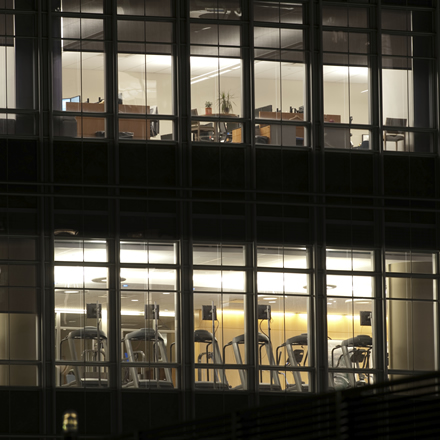
Anheuser Busch began by outfitting every U.S. facility and some international facilities with work out rooms, where employees are encouraged to work out before or after their shifts. The company also looked at some of the more strenuous jobs in the workplace and developed stretching routines for those jobs.
Participation in wellness programs is incorporated in the company’s business plan. Every plant is graded quarterly on how many walks or runs they do, exercise room participation, how many people have an annual visit to their physician. Jaeggi said the scorecards emphasize the importance of taking part in these activities.
Jaeggi said the program encourages employees to apply these healthy habits outside the job as well.
"We’re ask our employees to take those same types of concepts outside of the workplace if they’re going to be doing some strenuous work at home,” he said.
To promote overall wellness, the company conducts "move smart” classes on how to properly lift and carry a child or luggage and encourages employees to participate in group walks, runs and rides. They also have website to help with smoking cessation or weight loss.
Another key to having high participation in the wellness programs, Jaeggi said, is to incentivize various activities.
"We try to encourage them to go to their doctor at least once a year to get an annual physical.”
Employees take a card with them for their doctor to sign and at the beginning of the year a drawing is held for a range of prizes including SuperBowl tickets or a trip to the Daytona 500. In 2001, the program had 20 percent participation; in 2005 participation more than doubled to 44 percent.
Anheuser Busch have seen many positive outcomes with their wellness program, including increased productivity, lower worker’s compensation costs and lower group insurance costs. Even with higher health care costs, by 2005 the company spent $8.4 million in worker’s compensation costs, a decrease of more than half compared to costs in 1991. While total injuries in 1991 were at 2,390, by 2005 injuries were reduced to 237.
And, as Jaeggi points out, the program accommodates an aging work force and shows employees that the company cares about their health and well-being.